top of page

Resource Center
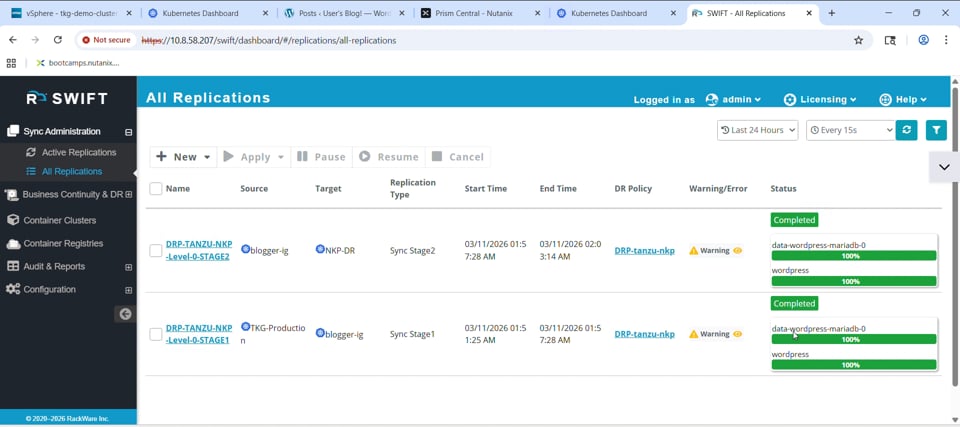
Tanzu to Nutanix NKP Disaster Recovery with RackWare SWIFT: Delta Replication, Failover and Fallback
This demo picks up after an initial Stage 1 plus Stage 2 sync between a VMware Tanzu source cluster and a Nutanix Kubernetes Platform (NKP) DR cluster, showing RackWare SWIFT's ongoing DR workflow in action. It covers a delta-only resync triggered automatically by the DR policy after new data is added on the source, verification of the replicated changes on the NKP target, a failover test to the DR cluster, fallback to restore the original Tanzu environment, and local backup
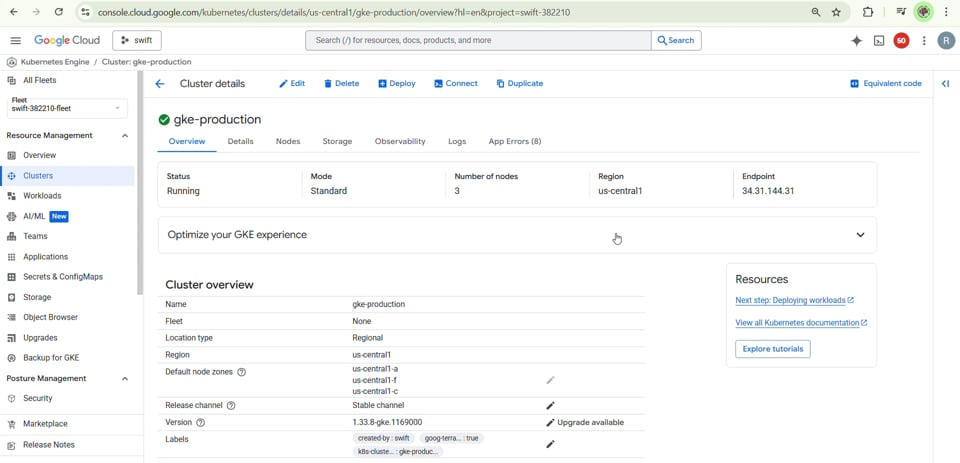
GKE to Nutanix NKP Disaster Recovery with RackWare SWIFT
Watch RackWare SWIFT configure disaster recovery replication for a WordPress application running on Google Kubernetes Engine (GKE), protecting it to a Nutanix Kubernetes Platform (NKP) DR cluster. This demo covers adding GKE as a source cluster and NKP as the DR target, storage pool setup for staged sync, replication ordering levels, and automatic storage class conversion from GKE's standard storage to Nutanix volumes. It also shows the full DR policy lifecycle in action: Sta
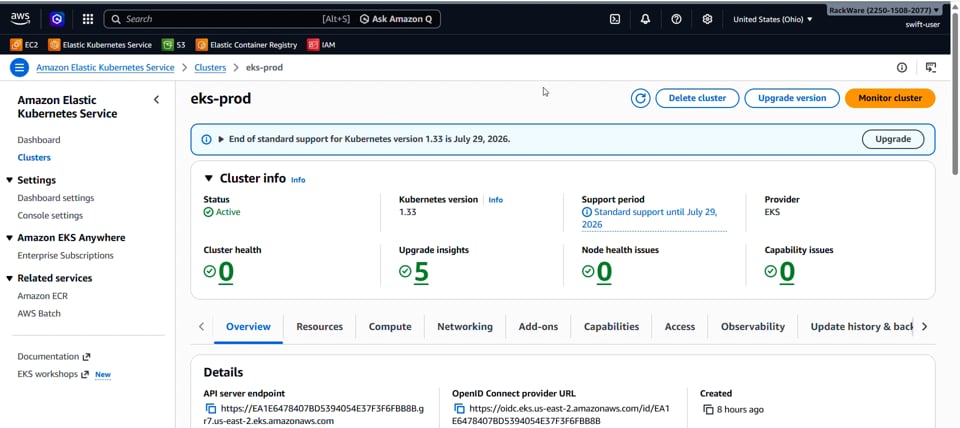
EKS to Nutanix NKP Disaster Recovery with RackWare SWIFT
Watch RackWare SWIFT configure disaster recovery replication for a WordPress application running on Amazon EKS, protecting it to a Nutanix Kubernetes Platform (NKP) DR cluster. This demo covers adding EKS as a source cluster and NKP as the DR target, storage pool setup for staged sync, replication ordering levels, and automatic storage class conversion from Amazon EBS to Nutanix volumes. It also shows the full DR policy lifecycle in action: Stage 1 plus Stage 2 sync execution
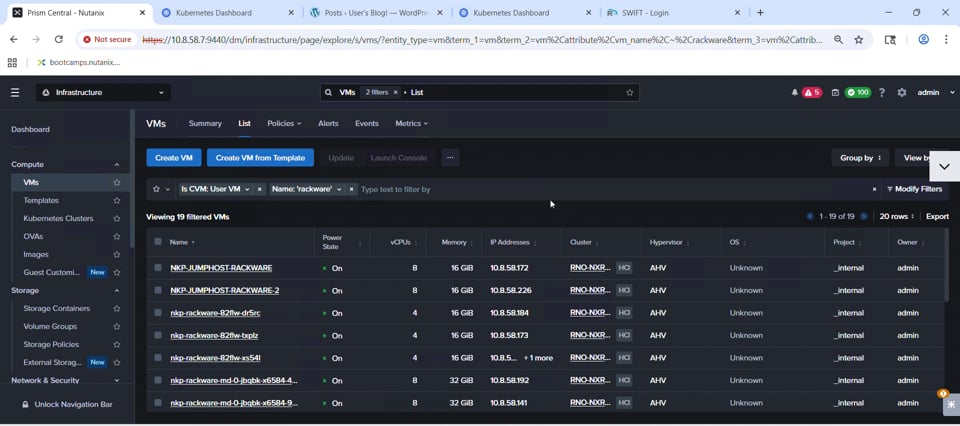
Disaster Recovery in Nutanix Kubernetes Platform with RackWare SWIFT
Nutanix NKP-to-NKP disaster recovery with RackWare SWIFT (stage 1 and stage 2 sync, delta replication, failover and fallback). Watch RackWare SWIFT configure cluster-to-cluster disaster recovery between two Nutanix Kubernetes Platform (NKP) clusters: replicating a WordPress application and its data from a primary production cluster to a DR cluster using staged sync, then testing delta replication, failover, and fallback. This demo covers the full DR policy lifecycle: storage
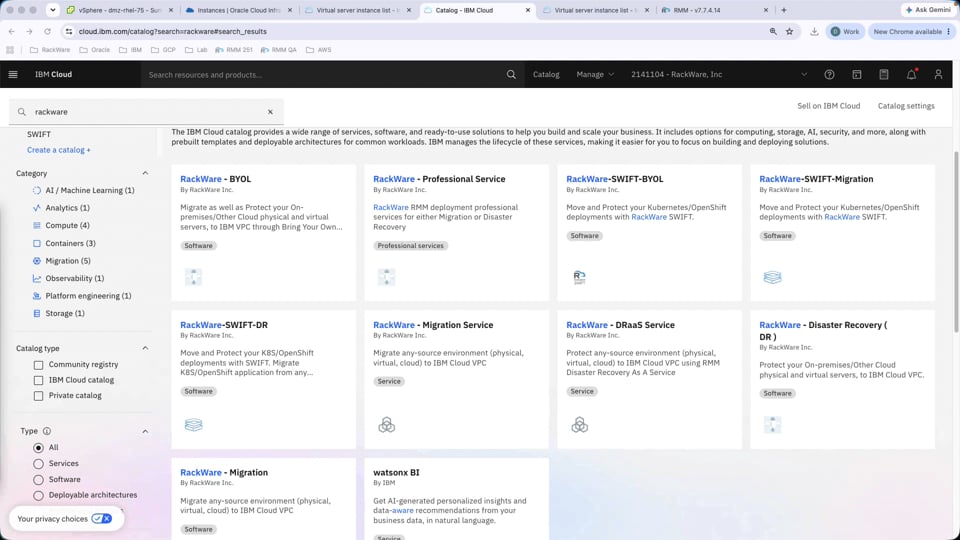
Disaster Recovery to IBM VPC: RackWare DR Setup Demo
This demo shows how to build a complete disaster recovery landing zone in IBM VPC using the RackWare engine, protecting source workloads across VMware, Oracle Cloud Infrastructure, and other IBM VPC regions into a single DR target. The walkthrough covers the full workflow: deploying the RackWare engine from the IBM Cloud Marketplace, discovering and adding source hosts, and running an initial stage-one sync to seed target storage. It demonstrates two DR configurations side by
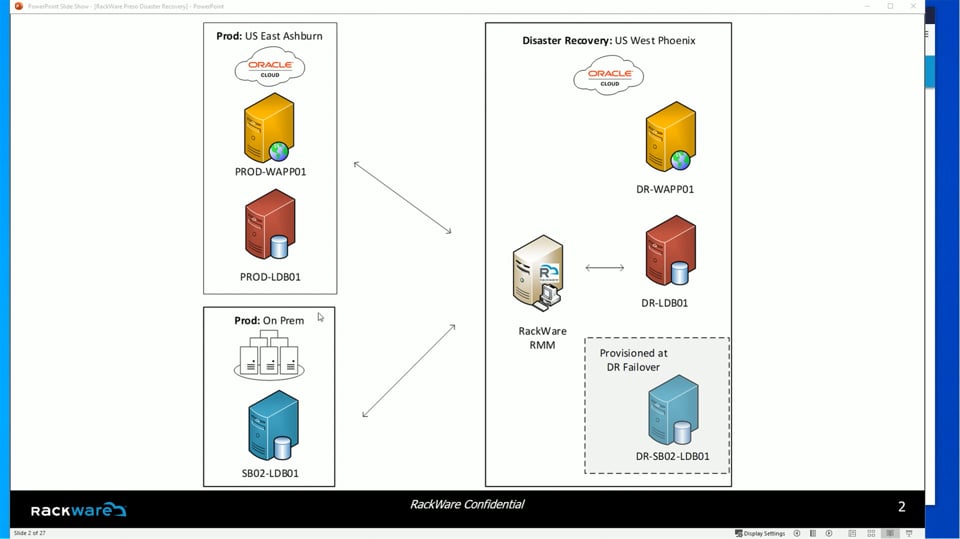
RackWare Disaster Recovery to Oracle Cloud Infrastructure (OCI) in Six Easy Steps
A step-by-step demonstration of protecting workloads that are actively running across both Oracle Cloud Infrastructure and an on-premise data center using RackWare


Evaluating DR Criteria - Part 5
Part V: DR Testing and Drills This is part 5 in a series of articles on understanding and addressing Disaster Recovery criteria. In this article we will discuss the often overlooked and neglected requirements and needs for DR drill and test. Part 1 was an introduction and overview. Part 2 covered the often overlooked personnel plan and site location. Part 3 explained the importance of application categorization to drive the correct RPO and RTO needs and the resulting impac


Evaluating DR Criteria - Part 4
Part IV: Backup Versus Disaster Recovery In Part 3 we addressed application categorization and its importance in assessing and determining optimal and economical RPO and RTO. I was originally going to address DR drills in Part 4 but after some consideration it's better to first discuss the dynamics of IT operations and how changes impact the DR plan, the DR configuration and product selection. Additionally, we’ll address the importance of understanding the difference betwee


Evaluating DR Criteria - Part 3
Part III: Not All Servers Are Equal In Part 2 we addressed DR site location and personnel plan and how these often under considered criteria can make or break the efficacy of your DR strategy. Now you've studied and understand your geographic risk and now understand the realistic and practical implications of your personnel plan. The next issues to address are application categorization and how that feeds into an intelligent plan for Recovery Point Objective (RPO), and Reco


Disaster Recovery Planning and Execution Problems
And How RackWare Delivers Reliable Recovery Executive Summary Most disaster recovery products focus on replicating data. Unfortunately, successful disaster recovery requires far more than simply copying data from one location to another. Organizations routinely discover during an outage that applications fail to start, dependencies are missing, recovery environments are incorrectly configured, or DR procedures have never been fully tested. Recovery plans that appear successfu


Evaluating DR Criteria - Part 2
Part II: The Human and Physical Reality In Part 1 we addressed the idea that many DR plans and strategies are too narrowly focused. Some only look at RPO; some are only focused on having a copy of data with no concept of total datacenter recovery. The two I’d like to address first (DR site location/network infrastructure and your personnel plan) are often the least considered. They’re not the quantitative metrics teams tend to fixate on; they’re about the physical and human r


Evaluating DR Criteria - Part 1
Part I: The Criteria That Matter Disaster Recovery products, deployments, and strategies have evolved extensively in the last 15 years or so. With Cloud technology, robust virtualization options, vastly improved wide area networking, and new products and methods, it can be a daunting task to plan and implement a modern Disaster Recovery solution. Legacy backup and DR products with limited support for Hyperscaler as well as emerging Cloud technologies can complicate things eve
bottom of page