top of page

Resource Center


Gaining Confidence in Your Disaster Recovery Runbook
Most organizations understand the importance of having a disaster recovery (DR) plan. They establish recovery time objectives (RTOs), recovery point objectives (RPOs), replicate critical workloads, and periodically test their ability to recover servers and applications.


Why Kubernetes Applications Need Backup and Disaster Recovery
Imagine a retail platform team finishing a routine release before a weekend promotion. The pods are running. Traffic is flowing. Then support reports that products are disappearing from customers’ saved shopping lists. The team rolls back the application. The faulty code stops running, but the missing records do not return. The database replica has faithfully copied the deletions. Kubernetes has kept the service available while the application has been losing data. Kubernetes
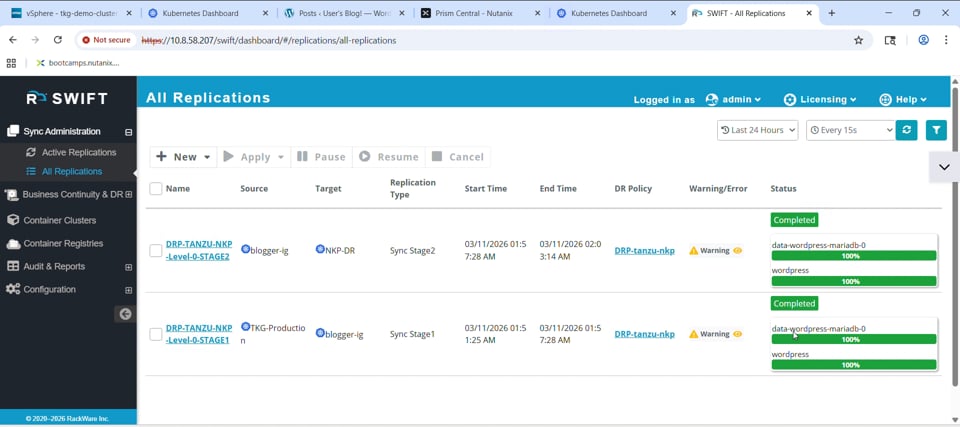
Tanzu to Nutanix NKP Disaster Recovery with RackWare SWIFT: Delta Replication, Failover and Fallback
This demo picks up after an initial Stage 1 plus Stage 2 sync between a VMware Tanzu source cluster and a Nutanix Kubernetes Platform (NKP) DR cluster, showing RackWare SWIFT's ongoing DR workflow in action. It covers a delta-only resync triggered automatically by the DR policy after new data is added on the source, verification of the replicated changes on the NKP target, a failover test to the DR cluster, fallback to restore the original Tanzu environment, and local backup
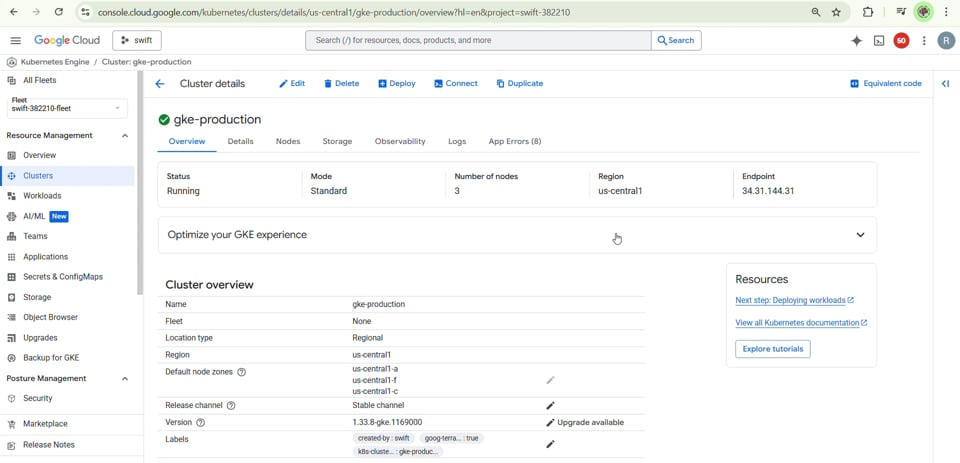
GKE to Nutanix NKP Disaster Recovery with RackWare SWIFT
Watch RackWare SWIFT configure disaster recovery replication for a WordPress application running on Google Kubernetes Engine (GKE), protecting it to a Nutanix Kubernetes Platform (NKP) DR cluster. This demo covers adding GKE as a source cluster and NKP as the DR target, storage pool setup for staged sync, replication ordering levels, and automatic storage class conversion from GKE's standard storage to Nutanix volumes. It also shows the full DR policy lifecycle in action: Sta
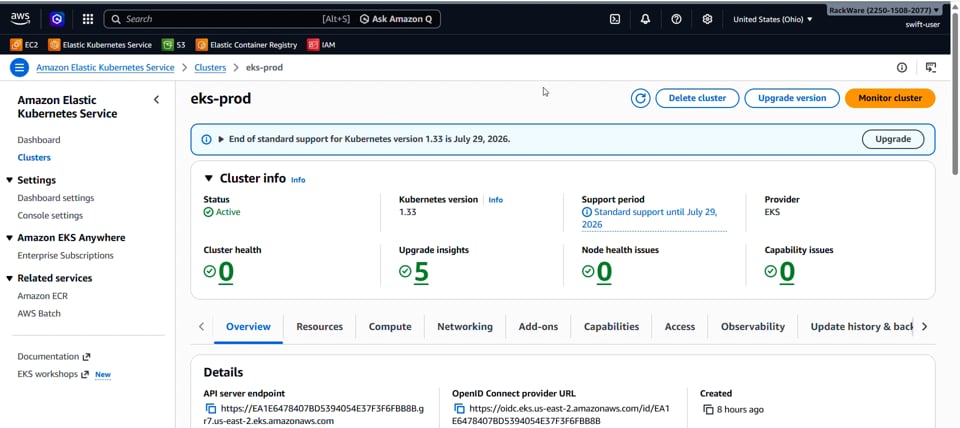
EKS to Nutanix NKP Disaster Recovery with RackWare SWIFT
Watch RackWare SWIFT configure disaster recovery replication for a WordPress application running on Amazon EKS, protecting it to a Nutanix Kubernetes Platform (NKP) DR cluster. This demo covers adding EKS as a source cluster and NKP as the DR target, storage pool setup for staged sync, replication ordering levels, and automatic storage class conversion from Amazon EBS to Nutanix volumes. It also shows the full DR policy lifecycle in action: Stage 1 plus Stage 2 sync execution
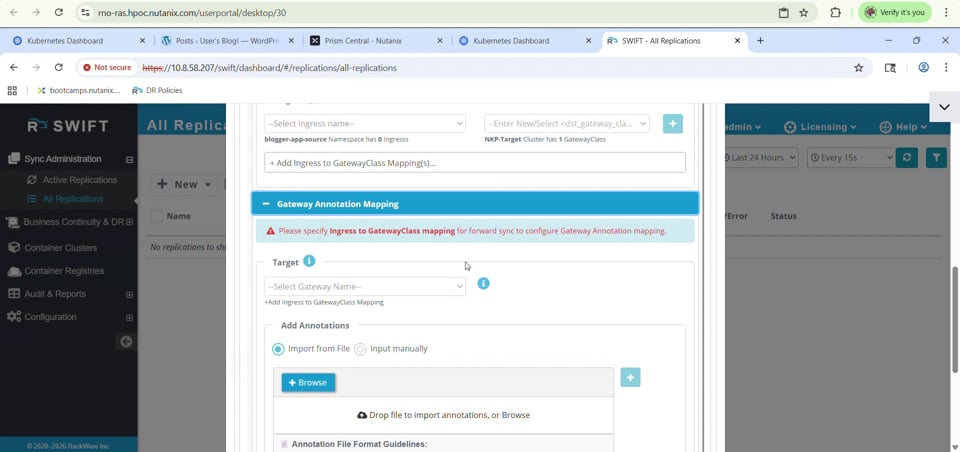
RackWare SWIFT Kubernetes Migration: GKE to Nutanix Kubernetes Platform (NKP)
Watch RackWare SWIFT migrate an application (WordPress) from Google Kubernetes Engine (GKE) to Nutanix Kubernetes Platform (NKP) live, with zero storage staging. This demo covers passthrough sync, automatic storage class conversion, delta-based DR replication, and a full failover test. See how SWIFT syncs a running Kubernetes app between clusters without modifying source objects, replicates only changed data on a schedule, and fails the application over to a new environment i
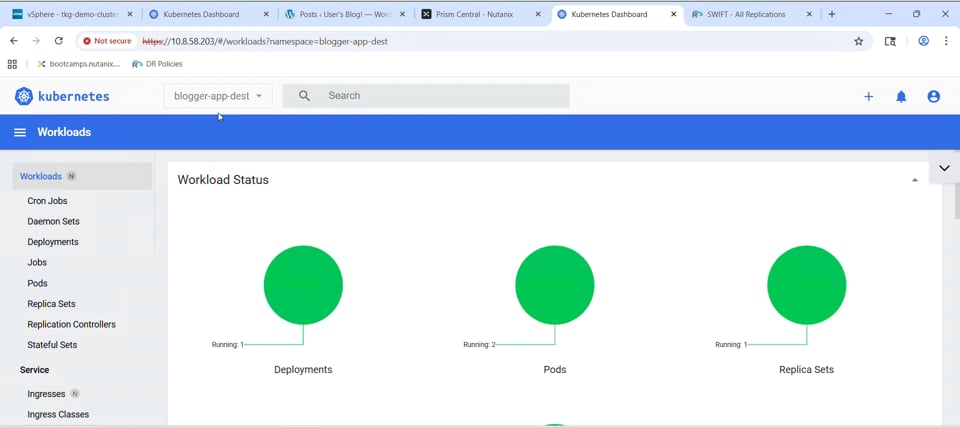
RackWare SWIFT Kubernetes Migration: VMWare Tanzu to Nutanix Kubernetes Platform (NKP)
Watch RackWare SWIFT migrate an application from VMware Tanzu Kubernetes Grid (TKG) to Nutanix Kubernetes Platform (NKP) live, with zero storage staging. This demo covers passthrough sync, automatic storage class conversion, delta-based DR replication, and a full failover test. See how SWIFT syncs a running Kubernetes app between clusters without modifying source objects, replicates only changed data on a schedule, and fails the application over to a new environment in minute
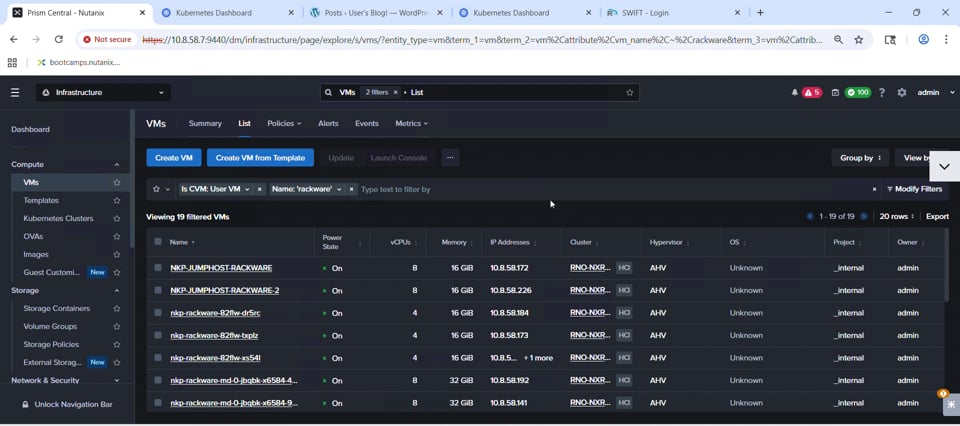
Disaster Recovery in Nutanix Kubernetes Platform with RackWare SWIFT
Nutanix NKP-to-NKP disaster recovery with RackWare SWIFT (stage 1 and stage 2 sync, delta replication, failover and fallback). Watch RackWare SWIFT configure cluster-to-cluster disaster recovery between two Nutanix Kubernetes Platform (NKP) clusters: replicating a WordPress application and its data from a primary production cluster to a DR cluster using staged sync, then testing delta replication, failover, and fallback. This demo covers the full DR policy lifecycle: storage
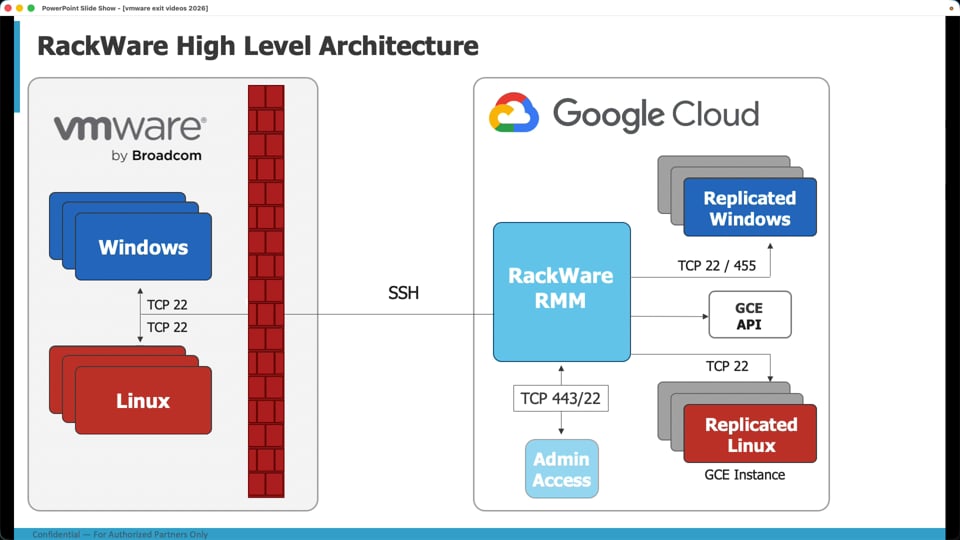
Quick Demo: VMware Exits to Google Cloud
Automated Live Migration of VMware Workloads to Google Cloud (GCE) with RackWare See how the RackWare Migration Module (RMM) performs a fully automated, live migration of VMware virtual machines to native Google Compute Engine instances — no downtime, no manual rebuilding. This demo covers deploying RackWare's engine from the Google Cloud Marketplace (or directly into your vSphere environment), configuring GCP cloud user access, uploading a wave file (CSV) to bulk-list source
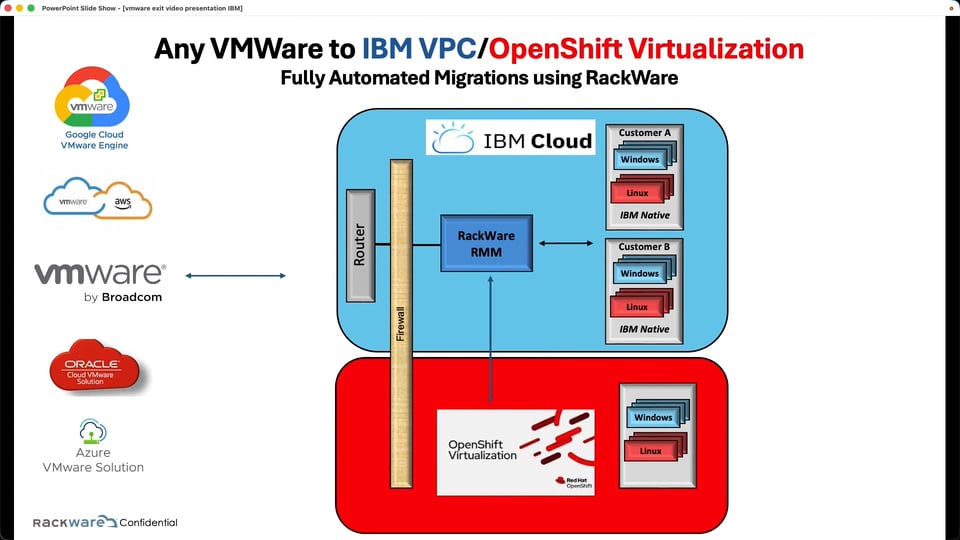
Quick Demo: VMware Exit to IBM Cloud
See how the RackWare performs a fully automated, live migration of VMware virtual machines to IBM VPC and IBM OpenShift Virtualization, with the source production host staying online throughout the sync. This demo covers deploying RackWare's engine into IBM Cloud via the IBM Cloud Catalog (BYOL and paid migration/DR listings available), configuring cloud API access, bulkuploading hosts via CSV to build a migration wave, setting parallel sync counts, and auto-provisioning targ
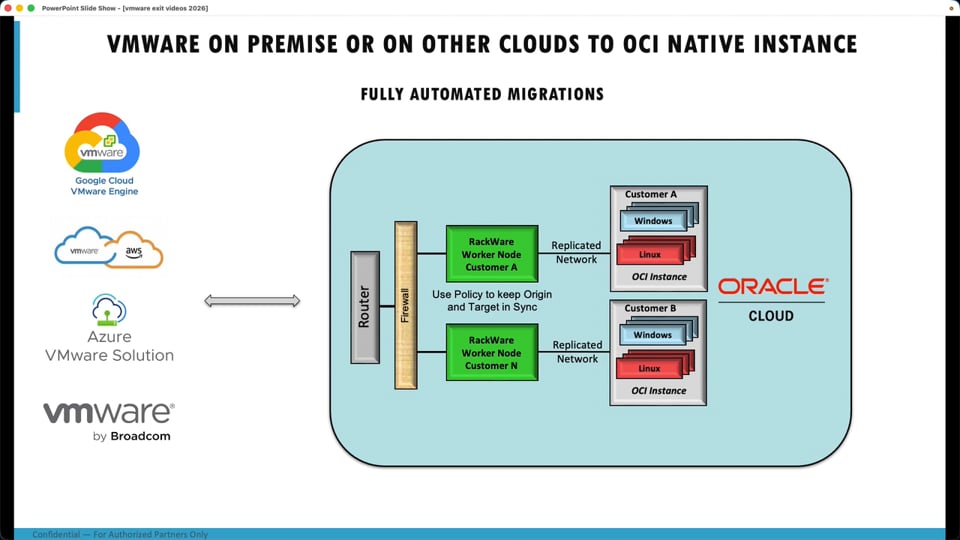
Quick Demo: VMware Exit to OCI
See how the RackWare performs a fully automated, live migration of VMware virtual machines to native Oracle OCI instances with no downtime and no manual rebuilding. This demo covers deploying RackWare's engine via the Oracle Marketplace, configuring source and target environments, bulk-uploading hosts via CSV for wave-based migration, auto-provisioning target instances in OCI, and validating the migrated application before running a final delta sync cutover. RackWare supports


NCA-Aligned Kubernetes Backup and Restore Validation for a Regulated Public-Sector Digital Platform
Portable OKE backups | Agentless protection | On-demand restore validation | DR-ready orchestration USE CASE Compliance-ready Kubernetes backup and restore PLATFORM Oracle Container Engine for Kubernetes SCALE Large multi-cluster estate RESTORE MODEL Dynamic on-demand restore clusters Executive Summary A regulated public-sector digital platform needed a repeatable, non-disruptive way to validate Kubernetes backup and restore readiness for NCA-aligned compliance expectations.


Broadcom Removed VDDK Downloads: What It Means for VMware Migration and DR
Published September 2, 2026 | Updated September 23, 2026 with sources and Broadcom's statement On or around August 25, 2026, the public download pages for VMware's Virtual Disk Development Kit (VDDK) stopped working. ShapeBlue documented the removal that day. There was no deprecation notice, no transition plan, and no stated replacement. A relatively technical issue in the VMware ecosystem has become a very real business problem for organizations trying to move and protect


Your AI Model Is Not Your AI Application
Protecting the full generative AI pipeline on Kubernetes and OpenShift with RackWare SWIFT If recovery brings back the model but loses the knowledge and state around it, the AI application is still down. A usable AI service is more than a model Generative AI gets attention at the model layer, but users experience an application. That application may combine an interface or API, enterprise content, retrieval, model serving, persistent data, security, networking, and Kubernetes
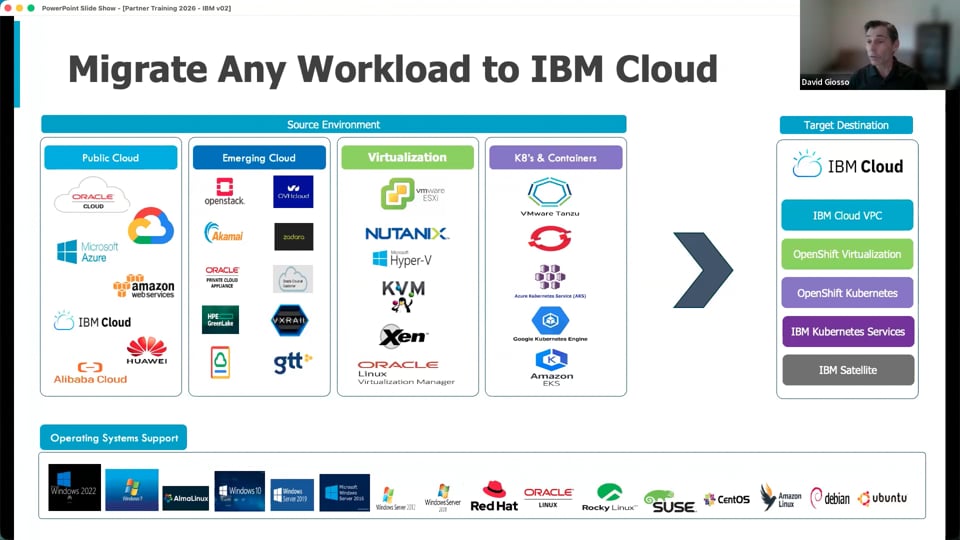
RackWare Academy: RackWare for IBM VPC
This technical training equips IBM Cloud engineers and architects with the knowledge and skills to deliver migration, disaster recovery, and backup solutions across IBM Cloud VPC, OpenShift Virtualization, and Hybrid Cloud infrastructures using the RackWare platform. What You Will Learn Key Use Cases Migration from on-prem (physical or virtual machines) or other public and private cloud environments to IBM Cloud VPC Comprehensive Disaster Recovery across IBM Cloud region
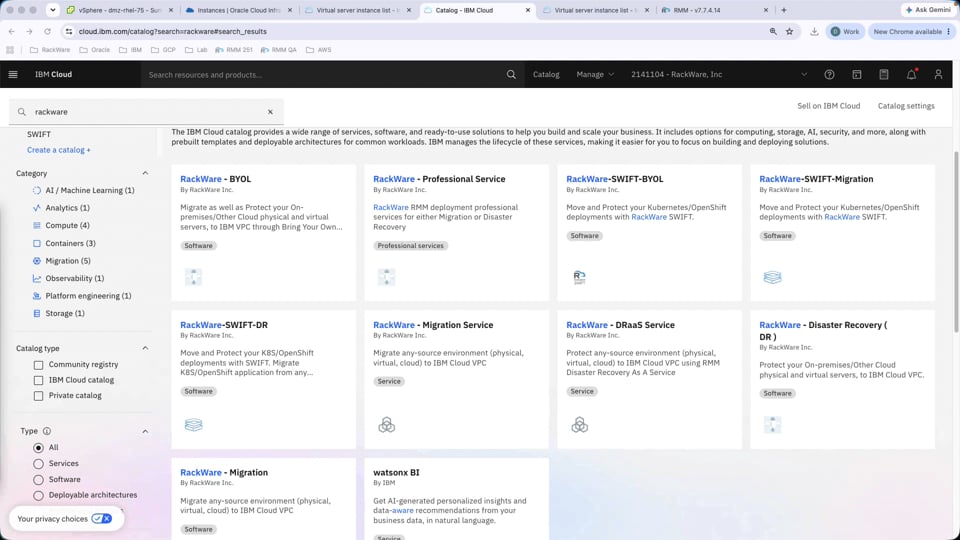
Disaster Recovery to IBM VPC: RackWare DR Setup Demo
This demo shows how to build a complete disaster recovery landing zone in IBM VPC using the RackWare engine, protecting source workloads across VMware, Oracle Cloud Infrastructure, and other IBM VPC regions into a single DR target. The walkthrough covers the full workflow: deploying the RackWare engine from the IBM Cloud Marketplace, discovering and adding source hosts, and running an initial stage-one sync to seed target storage. It demonstrates two DR configurations side by
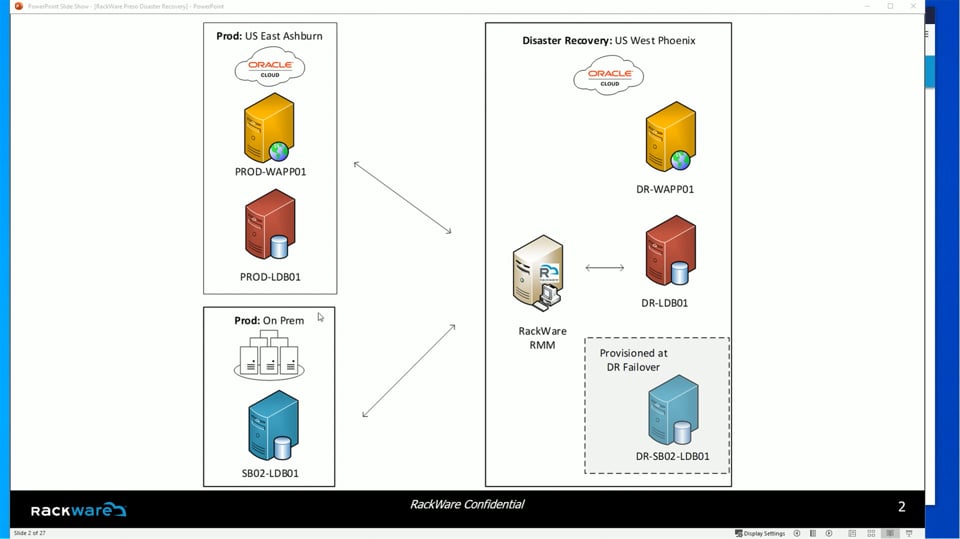
RackWare Disaster Recovery to Oracle Cloud Infrastructure (OCI) in Six Easy Steps
A step-by-step demonstration of protecting workloads that are actively running across both Oracle Cloud Infrastructure and an on-premise data center using RackWare


Evaluating DR Criteria - Part 5
Part V: DR Testing and Drills This is part 5 in a series of articles on understanding and addressing Disaster Recovery criteria. In this article we will discuss the often overlooked and neglected requirements and needs for DR drill and test. Part 1 was an introduction and overview. Part 2 covered the often overlooked personnel plan and site location. Part 3 explained the importance of application categorization to drive the correct RPO and RTO needs and the resulting impac
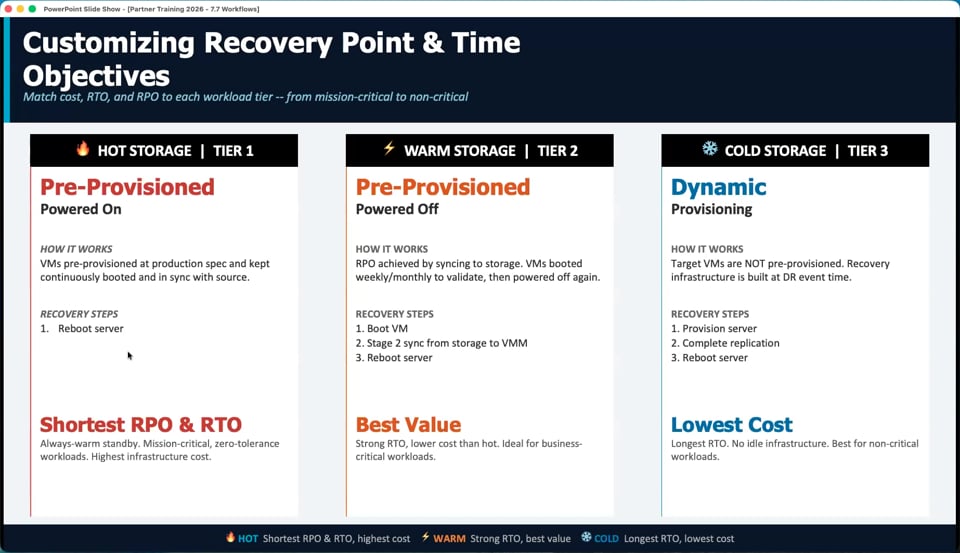
RackWare Academy: What's New In 7.7
RackWare RMM Version 7.7 represents significant improvements to how migration and disaster recovery (DR) workflows are structured, in addition to UI improvements and new features like Bulk Discovery, Auto-Provisioning, and DR Failover Groups.


RackWare Best in Class Solution
Why Filesystem-Level Replication Outperforms Storage Sector and VMDK Approaches RackWare employs a unique, patented, delta sync mechanism to execute Migration, DR, and backup operations that has the largest scope of use cases in the industry. It is a Filesystem mechanism, operating on used data, not a storage sector or VMDK based approach. Products that employ a storage sector or VMDK approach often have issues surrounding data consistency that prevents applications and serve
bottom of page